
Pellicle, the reader-supported independent food and drink magazine based in Stockport, has announced that pre-orders for its first print issue are now live on its website.
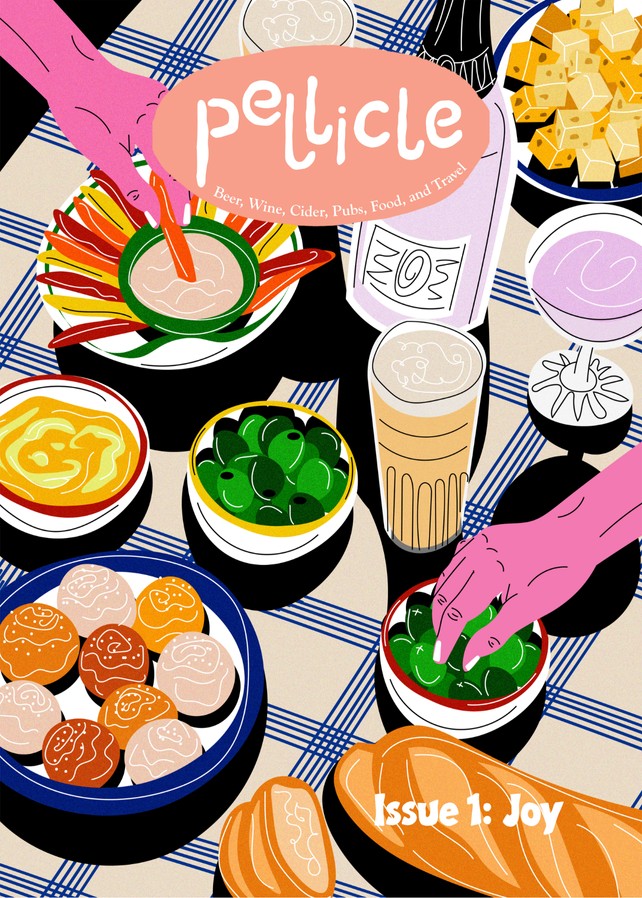
After publishing award-winning beer, wine, cider, food, and travel writing online for the last seven years — winning beer publication of the year at the British Guild of Beer Writers Awards in 2025 — Pellicle is making the leap into print. The 156-page magazine is themed on the topic of ‘Joy’ and will be released on 12th November.
Printed by Buxton Press, in Derbyshire, and designed by managing editor Katie Mather, with support from Tim Lampe, Pellicle’s first issue costs £13.95, plus postage.
The first features original contributions from, among others:
- chef and author of Japaneasy, Tim Anderson;
- cheesemonger and author of the Sunday Times bestseller A Cheesemonger’s History of the British Isles, Ned Palmer;
- Pellicle editor-in-chief and author of the guidebook Manchester’s Best Beer, Pubs and Bars, Matthew Curtis;
- James Beard Award–winning editor and Pellicle managing editor, Claire Bullen;
- award-winning beer writer and one half of YouTube’s The Craft Beer Channel, Jonny Garrett; and
- the British Guild of Beer Writers’ beer writer of the year 2025, David Jesudason.
The magazine also features an interview with SNL UK star George Fouracres by Katie Mather, a dedicated mix recorded from vinyl by DJ Ham (Pellicle co-founder Jonny Hamilton), a puzzle section, and posters to cut out featuring gorgeous pints of beer.
“It’s an unbelievable feeling to be bringing the first print edition of Pellicle into the world at last, and I am excited for people to get it into their hands,” said Matthew Curtis. “Special thanks must go to the incredible efforts of my colleagues Katie Mather and Claire Bullen, who have done an amazing job on this beautiful-looking magazine.”
Claire Bullen added: “Choosing ‘Joy’ as the theme for our first issue was really important to us. It both evokes one of Pellicle’s founding principles and is intended to be galvanising. In these decidedly un-joyful times, it felt important to return to human-centred, shared experiences — particularly those based around food and drink — and to find joy, connection, and possibility there.”
