
There are fresh limited edition labels and crown caps for bottle of Westmalle Dubbel as the Belgian Trappist brewers mark the beer’s centenary.
The monks of Westmalle brewed their first beer in 1836 to accompany their meals. Twenty years later, the abbey’s accounts recorded two distinct beers: a light table beer for the community’s own consumption, and a slightly stronger brown beer. When brewing resumed after the first world war, the monks continued to develop this brown beer.
The name Dubbel Bruin emerged in the 1920s. In 1926, the monks refined the recipe, creating the Westmalle Dubbel we know today. The name Dubbel also dates from this period and refers to the use of twice as much malt as in the original brown beer. What began as a brown Trappist beer went on to set the benchmark for an entire beer style.
“Speciality beers were nowhere near as prominent then as they are today,” said Philippe Van Assche, general manager of Westmalle Brewery. “Westmalle Dubbel helped the abbey brewery grow and contributed to Trappist beer securing a permanent place in Belgium’s beer landscape.
“A century later, it is still brewed according to the same philosophy, with an unwavering focus on quality, craftsmanship, and continuity,”
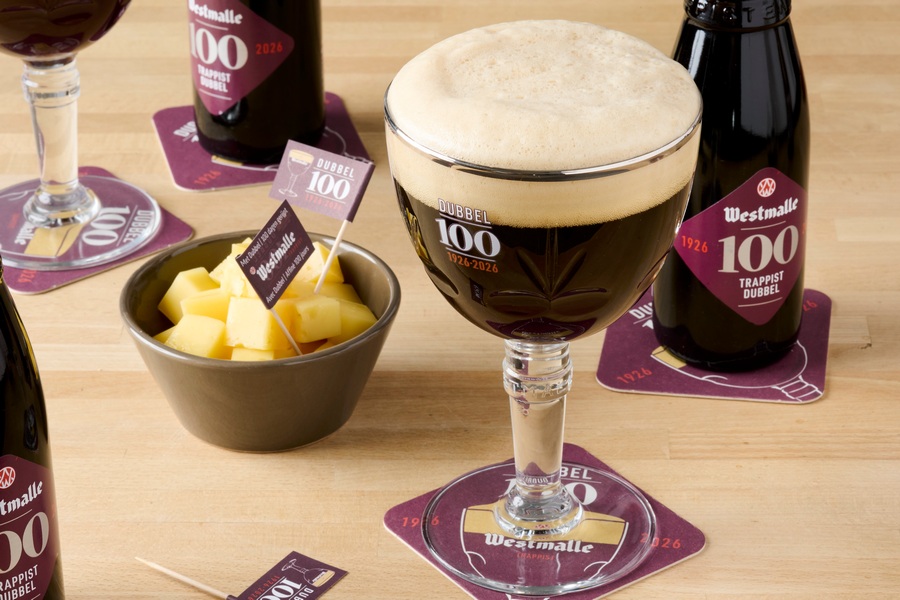
As well as the specially-branded bottle, a limited edition of the iconic Westmalle glass is also being released, featuring a design commemorating 100 years of the Dubbel. The glass will have a delicate silver rim, echoing a finish occasionally seen on Westmalle glasses several decades ago. Limited-edition 75 cl bottles and three-litre jeroboams with enamel decoration will follow in the autumn.
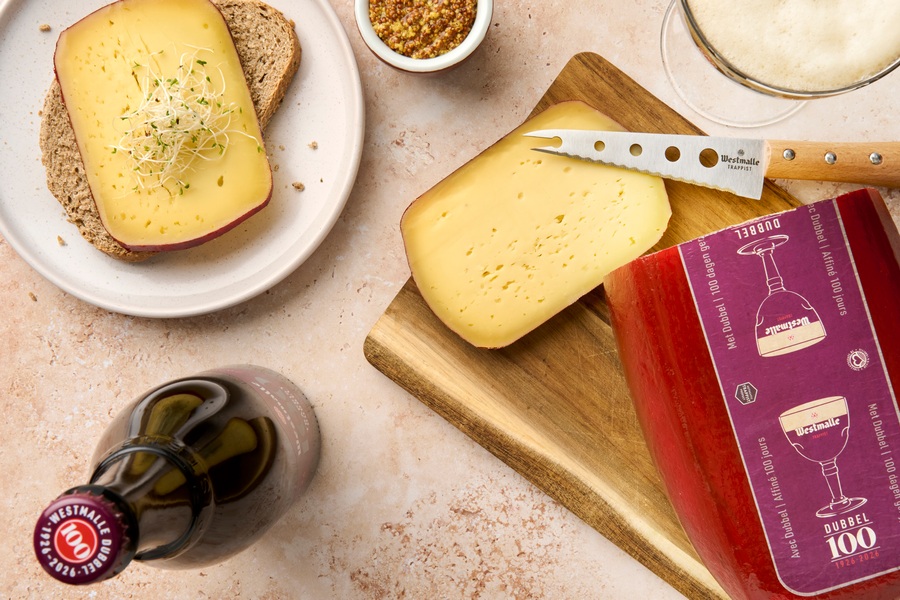
From late September to late October, selected cafés serving Westmalle Dubbel on draught will, for a limited period, offer customers a portion of Westmalle cheese with every Dubbel ordered. Created specially for the centenary, the cheese has been produced as a one-off in limited batches. Westmalle Dubbel was added during production, after which the cheese was matured for at least 100 days.
Van Assche added: “For the monks, brewing has never been an end in itself. The brewery’s revenue is used first and foremost to meet the needs of the community. Beer production also enables the monks to assist other abbeys and contribute to numerous charitable causes.
“Westmalle Dubbel has, therefore, become more than a beer with character; it is also a beer with purpose. A hundred years on, it remains a symbol of the Trappist brewing tradition.”
About Trappist Westmalle
The Abbey of Our Lady of the Sacred Heart of Westmalle is one of Belgium’s five brewing Trappist monasteries and belongs to the Order of Cistercians of the Strict Observance.
The monastery was founded in 1794 by monks from La Trappe Abbey in Normandy, who had fled France during the French Revolution. It was elevated to the status of an abbey in 1836. That same year, the monks began brewing beer.
Following the Rule of Saint Benedict, Trappists lead a life centred on prayer and work. Through their work, they also help provide for the needs of the community. The monks therefore developed a range of traditional crafts. Today, Westmalle Abbey is home to a brewery, farm, bakery, and cheese dairy.
The monks do not seek to maximise either production or profit. Output is deliberately limited. Revenue from the sale of Trappist beer and cheese is used to support the monastic community, preserve the abbey’s heritage, pay its lay employees, and fund essential investments in equipment and buildings. Any surplus is donated to other abbeys and a variety of charitable causes.
Westmalle Abbey is currently home to 17 monks. It also employs 75 lay staff, 53 of whom work in the brewery. Four beers are brewed at the abbey: Extra, Dubbel, Tripel, and Duo. Total annual production is approximately 120,000 hectolitres.
What is a Trappist beer?
Trappist is first and foremost a designation of origin. The name may only be used when a beer’s production is linked to a Trappist abbey. It is legally protected, and the International Trappist Association (ITA) monitors its proper use.
In Belgium, beers from five abbeys may carry the ‘Trappist’ designation: Chimay, Orval, Rochefort, Westmalle, and Westvleteren. For more information about the Trappist designation and the ITA, visit trappist.be
