
Hop grower the BarthHaas Group has joined a global community of more than 11,000 companies taking meaningful action on climate change.

The John I Haas Longmire Ranch, in Washington’s Wenas Valley. Photographs: BarthHaas
They have committed to set near‑term science‑based targets aligned with the 1.5°C pathway, the most ambitious level defined by the Science Based Targets initiative (SBTi) to keep global warming below catastrophic levels.
“This reflects our long-standing commitment to sustainable innovation and our responsibility to reduce emissions in line with the latest climate science,” said Laxmi Pandit, sustainability manager at John I Haas.
As part of its commitment, BarthHaas will follow the SBTi rule that Scope 1 and 2 targets must cover at least 95% of corporate emissions under operational control. Also, since value‑chain emissions often dominate agricultural and processing industries, BarthHaas will also establish a Scope 3 target in line with SBTi requirements.
BarthHaas’ Global Sustainability Group is creating greenhouse gas (GHG) inventories and calculating their minimum decarbonization requirements. “We see global group-wide collaboration as an opportunity to advance our sustainability efforts through shared knowledge and complementary resources,” said Christian Kammerer, global sustainability co-ordinator for the BarthHaas group.
The next step will be preparing a draft emission reduction roadmap with a five- to 10-year target timeframe from the base year that will be submitted to the SBTi for approval later this year.
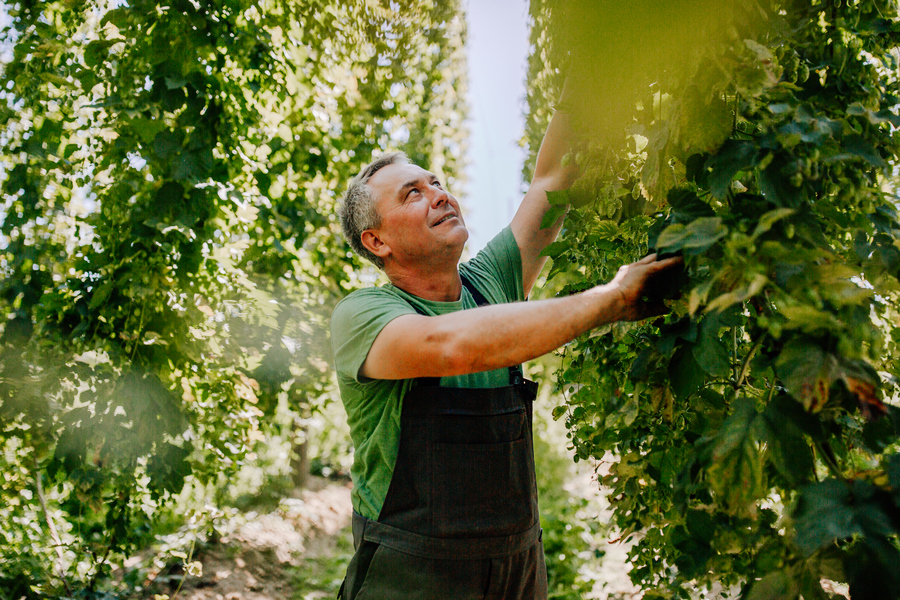
Different measures will take precedence across the BarthHaas group’s different sites. Some sites are focused on using production waste as biological fuel for heat generation and on expanding photovoltaic systems to generate green electricity. Other sites are considering merging production facilities to leverage synergies and recover process gases.
“Horticultural productivity both impacts and is impacted by the changing climate,” said George Webster, sustainability manager at Hop Products Australia. “This makes mitigation and adaptation key to the continued supply of high-quality hops. Our SBTi commitment will enable us to define decarbonisation strategies that are appropriate for our sector. We see great potential for emissions reduction, particularly in the use of renewable energy sources.”
Intensified co-operation with suppliers is also on the agenda to align with SBTi targets. Customers and stakeholders will be able to track progress through annual climate reporting, meeting SBTi’s requirements for transparent annual disclosure.
The SBTi is a collaboration between the Carbon Disclosure Project, the United Nations Global Compact, the World Resources Institute, and the World Wide Fund for Nature, that enables companies worldwide to play their part in combating the climate crisis. They have developed standards, tools, and guidance that allow companies to set emission reduction targets in line with climate science.
“By aligning with the SBTi, the BarthHaas group intends to set an ambitious emission reduction target, and we encourage others in our industry to make a similar commitment,” said Tamanda Whittle, quality and sustainability liaison co-ordinator for BarthHaas UK. “Together, we can help reduce global emissions and build a better future for our planet, our communities, and our customers.”

